

We spent much of 2025 and 2026 heads down writing (and illustrating).
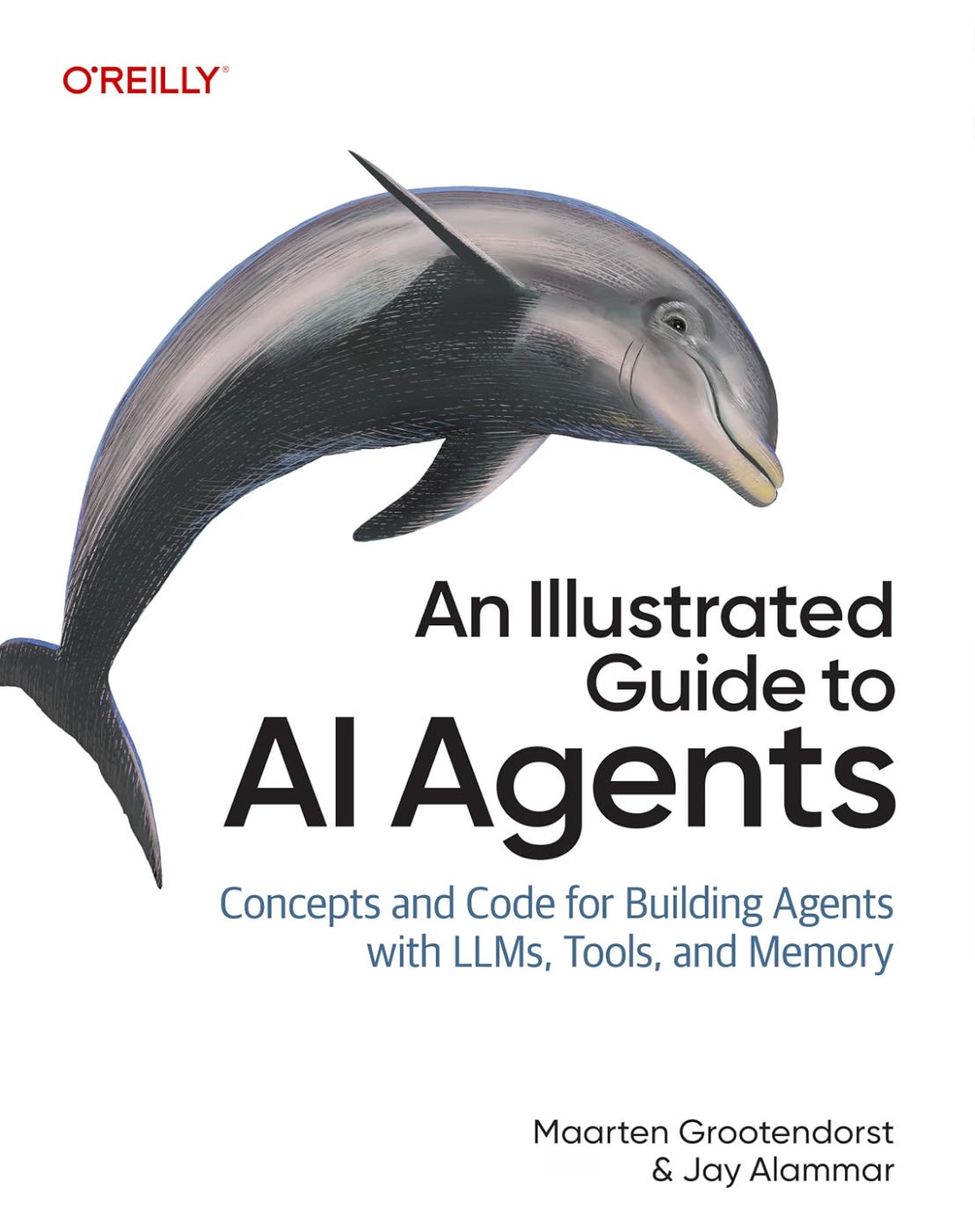
The result is An Illustrated Guide to AI Agents, the new book Maarten Grootendorst and I wrote for O’Reilly. The ebook was released in September 2026, print followed in October, and in November it reached #1 in Amazon’s Artificial Intelligence best sellers.
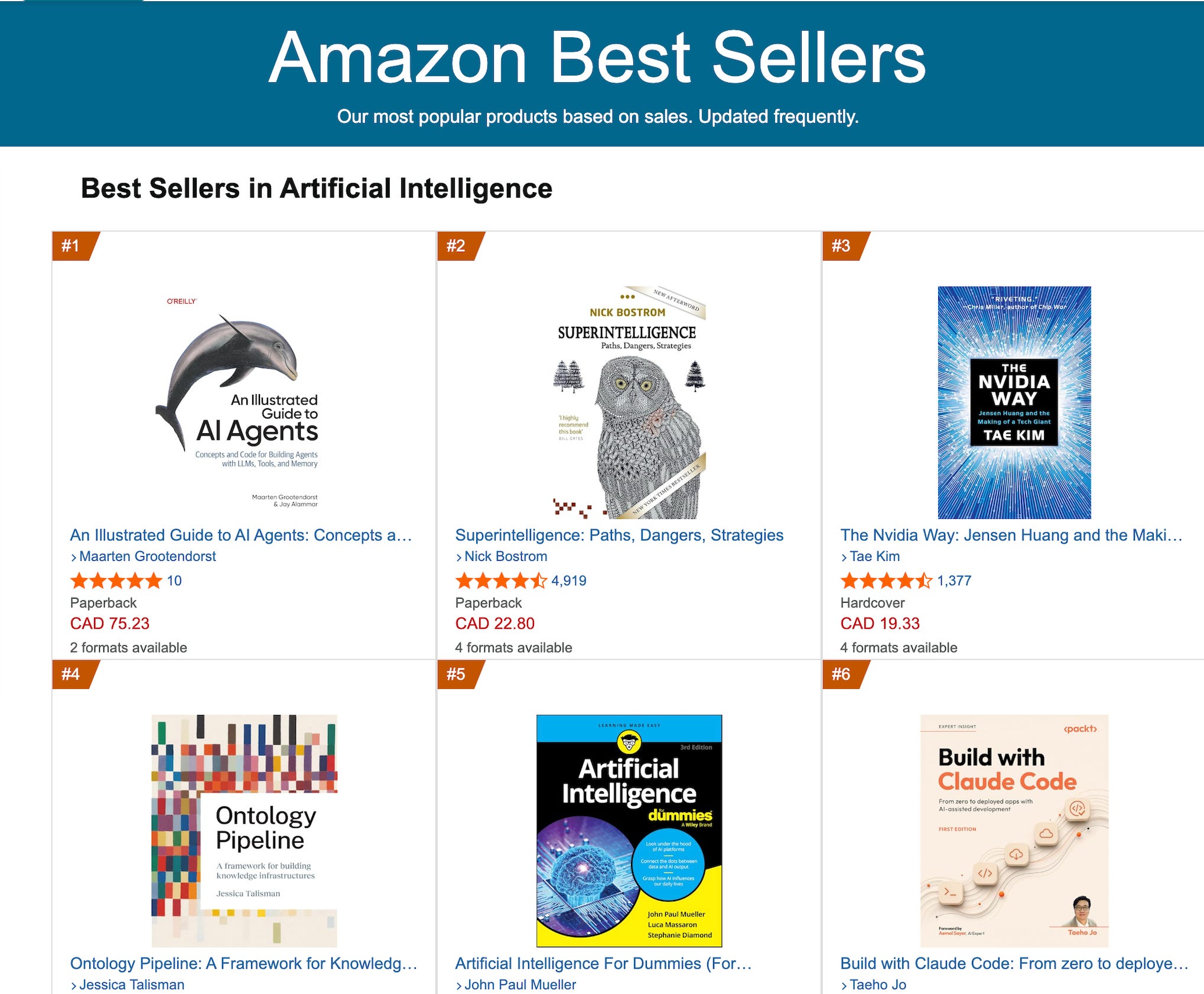
Why this book
When we wrote Hands-On Large Language Models, the LLM was the center of attention: how it reads, how it generates, how to put it to work. Since then, the focus has moved from the LLM to the agent, and that shift brings a new set of questions about how agents work and how to tell when they don’t. This book is our answer. The field moves fast, so we focused on the ideas that will stay useful after this year’s frameworks have been replaced.
What’s inside
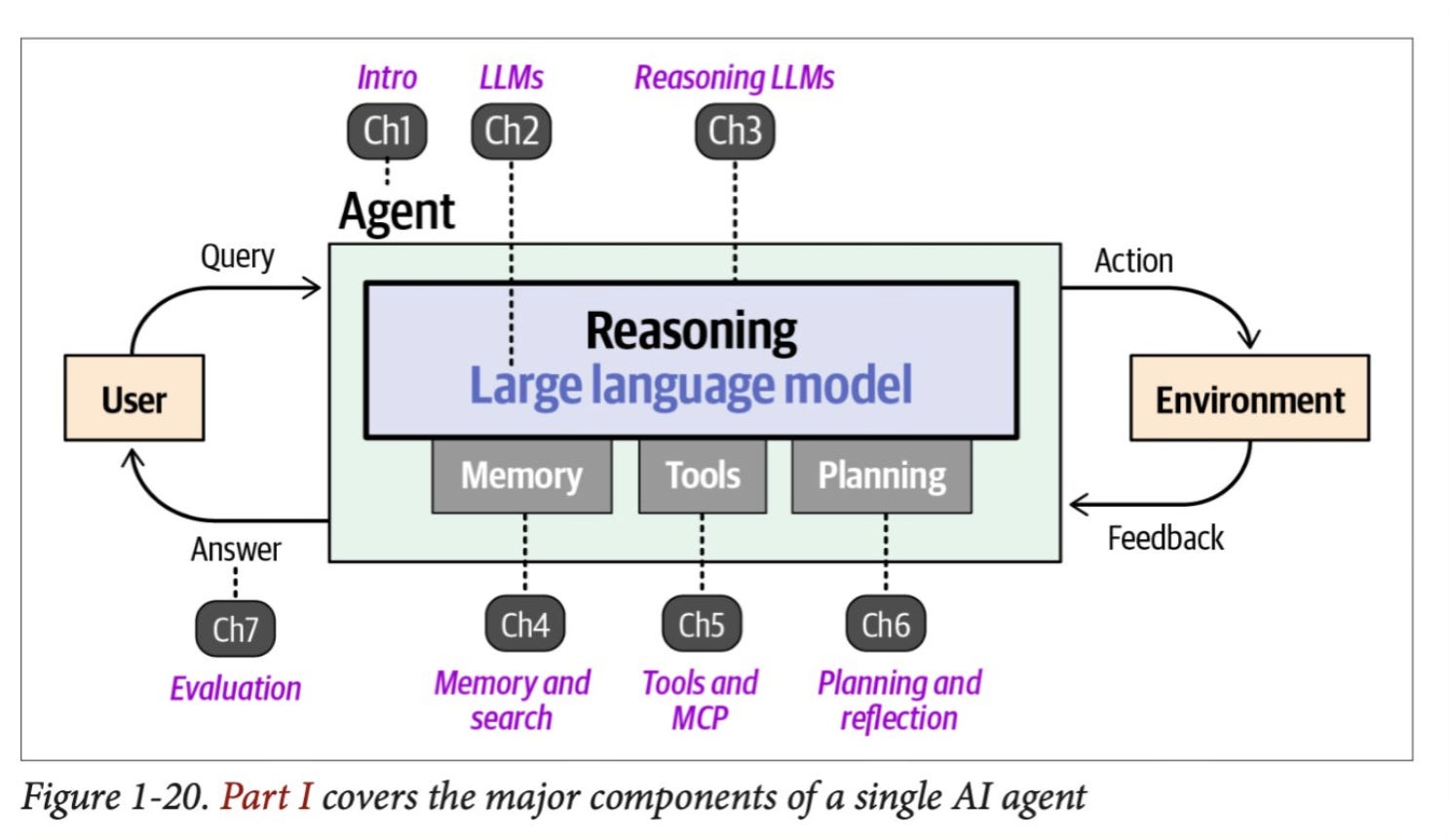
The book follows the same visual approach as the Illustrated series, with 300+ hand-crafted figures woven into the text. It starts with the foundations and builds up to complete agents:
Part I: Foundations
Introduction
Large Language Models
Reasoning Large Language Models
Memory
Tool Usage, Learning, and Protocols
Planning and Reflection
Evaluating Agents
Part II: Specializations
Multi-Agent Systems
Multi-Modal Understanding
Code Agents and Code LLMs
Throughout the book, you build TinyAgent, a small hands-on agent that grows as each new concept is introduced.
What people are saying
“The authors are exceptional builders, and this book is a testament to the depth of their knowledge. The generous illustrations and hands-on TinyAgent exercise make the concepts approachable, intuitive, and fun to learn.”
~ Chip Huyen, author of AI Engineering and Designing Machine Learning Systems
“Maarten and Jay do an impressive job identifying and explaining the timeless ideas in this fast-moving field, and I expect this to become the first book I recommend to anyone who wants to understand how modern agents work and how to build them.”
~ Omar Khattab, Assistant Professor, MIT EECS
“Grootendorst & Alammar explain the entire AI agent stack, from tokenization to multi-agent systems, in an engaging visual style. As the field evolves, this book will continue to serve as a useful reference because it covers the subject matter so thoroughly.”
~ Ofir Press, Research Scientist at Meta FAIR, co-author of SWE-bench and SWE-agent
Get the book
[Amazon] · [O’Reilly] · [eBooks.com PDF] · [Shroff (India)]
Code and notebooks
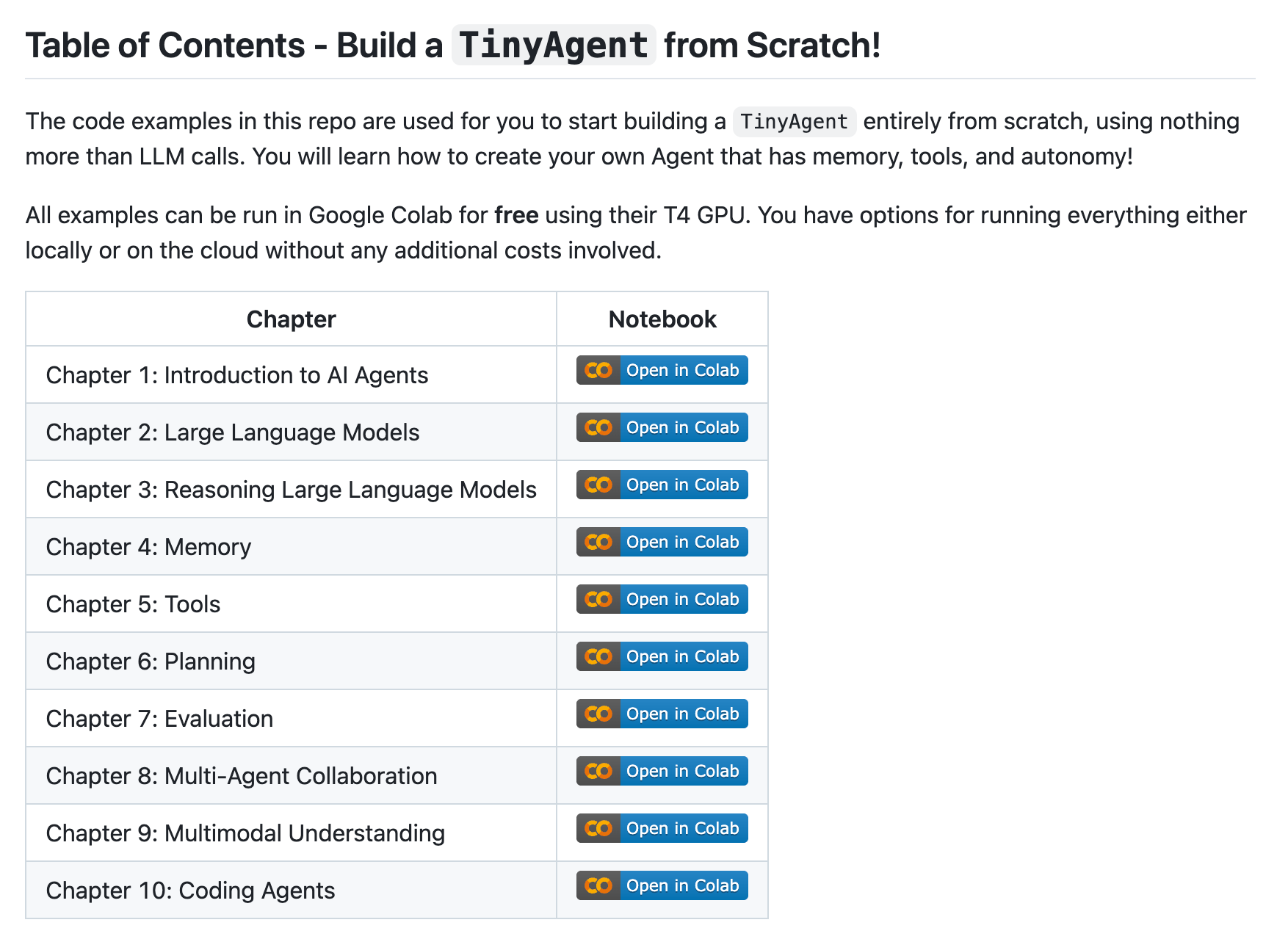
All the code from the book, including the full TinyAgent build, is available in the companion repo: HandsOnLLM/An-Illustrated-Guide-To-AI-Agents. You can run the notebooks on their own, but they work best alongside the figures in the book.
Win a copy
To celebrate, I’m giving away five copies of the ebook.
To enter, leave a comment on the post (email replies won’t count) with an agent concept you think deserves to be illustrated: something you’ve found confusing, hard to explain, or just fascinating. The more specific, the better.
I’ll pick my two favourite ideas, and the other three winners will be drawn at random from all comments. Entries close on November 30, 2026.
If you read it, I’d love to hear what you think. And if it helps you, an Amazon review goes a long way in helping other readers find it.
Thank you for reading and for supporting this work over the years. Happy reading!
Jay
Hi Jay, thanks for the consistently clear explanations. A topic suggestion: agentic engineering as an extension of software engineering best practices.
I think the field is best understood as a new way of working efficiently with foundation models, rather than a separate discipline. The model is a probabilistic, fallible component, so the fundamentals we already trust apply directly: modular design (single-purpose agents and tools), testing (evals as unit and regression tests), versioning and review for prompts, observability (tracing, cost, latency), least-privilege security, and solid error handling with fallbacks and guardrails.
Teams with strong engineering foundations will build the most reliable agents. A post mapping classic practices to their agentic equivalents would be very useful, especially with your visual approach.
Thanks for considering it!
For better real world connections, I’m eager in multi modal understanding. I’d love to see the types of shared embedding space to get illustrated.
To be precise, Cross modal reasoning with same example but on different modality problems can help in understanding the first level nuances in shared embedding space.